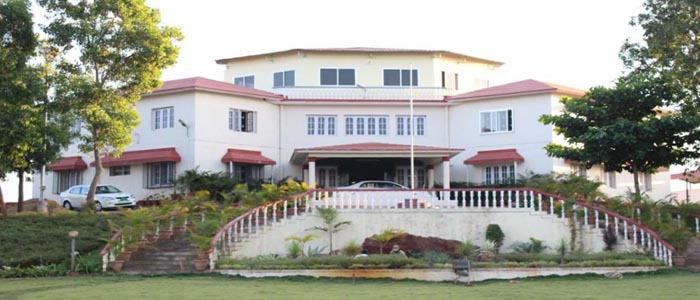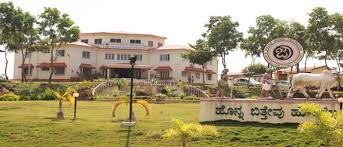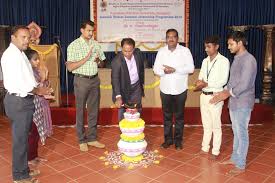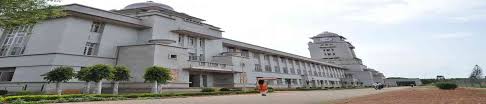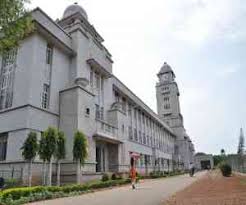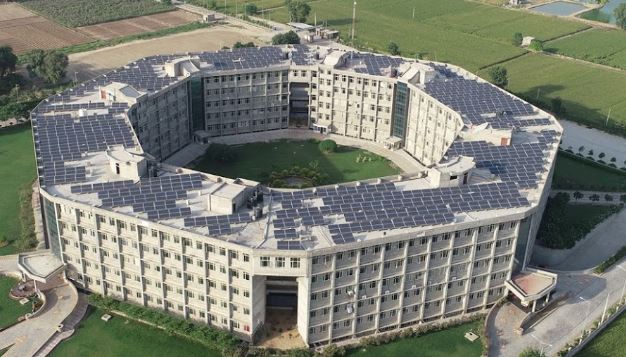
Karnataka Folklore University is established with a specific objective of providing the greater platform in Folklore Studies.
There can be no doubt that this university will bring to perspective the vibrant folk culture of Karnataka to the topmost level of visibility among all other cultural forms of Karnataka and bring to fruition the meaningful initiative of the Government of Karnataka. At present in the whole of Asia, this is the only university providing advanced teaching, learning and research opportunities to students of folklore and it has a commitment to excel in translating its vision and mission into reality. Establishment of this university has certainly added a new dimension to higher education in Karnataka, worthy of emulation by other linguistic states of India, as the next frontier of inclusive studies of Kannada culture.
Karnataka is a rich treasure house of Traditional Knowledge. The process of unearthing this knowledge involves collecting data, documenting the knowledge system and understanding the contextual importance of such knowledge sources. This collection, preservation and conservation of Folk elements need highly professional stream of academicians who can transform such thoughts into practices. This is possible only when graduates are produced not only with skills to deal with such material but also, with the right aptitude to do such work. They should admire our culture and heritage first. Therefore, there was a pressing need for establishing a Folklore University to provide an opportunity for Higher Education and also to conduct advanced Research in the field of Folkloristics.
Courses Offered
Diploma
Diploma in Folklore
Course
Folklore the ambiance provided by the institute facilitates quality learning. Folklore aims to produce technical and management professionals of global standards. The Folklore mission is to develop well qualified, globally accepted, world class technically sound professionals, capable of updating with cutting edge technologies, innovative research ideas with social commitments and highest ethical values as inner strength, for the upliftment of man kind, trained through high profiled experienced faculty, career oriented courses and interactive teaching-learning process.
Duration : 3 Years
Eligibility : Must have candidate should have pass in 10+2 or Graduation or equivalent
Bayalāṭada is a form of Yakshagana found in southern Indian region of Karnataka featuring stories from Indian epic poetry and the Puranas rendered as dance and drama. Bayalāṭa literally means open theater drama and marks the end of harvest season. The most popular theme for bayalāṭa is the story of Kōṭi and Cennayya, which has deep-rooted significance for the people of Tulu Nadu. There are generally five types of Bayalayas -Dasarat,Sannata,Doddata,Parikatha and Yakshanaga .Parijat and Yakshagana are narrated by single sutradhar while other three forms are performed in corus of three-four, aided by Vidhushaka.
Duration : 3 Years
Eligibility : The minimum qualification required for admission into a diploma course is passing of the Secondary School Leaving Certificate (SSLC)/tenth standard/equivalent examination, with at least 35 percent in science and maths subjects
Study of Science is a means to understand the Knowledge of human beings. The branches demarcated as pure science and applied science have specific norms and structures. Folklore is also a science with definite characteristics and that aspect of Folklore will be taught under the courses B.Sc- M.Sc. This provides a greater opportunity to the students to understand the science of living in the folk human culture
Duration : 5 Years
Eligibility : The minimum educational qualification needed for this course is a pass in 12th or equivalent from any reputed institutes in related subjects.
Bachelors of Arts and Masters of Arts (BA-MA) Integrated is Five-years Full-time Course and Offered by Karnataka Janapada Vishwavidyalaya, Shiggavi. This is 5 Years integrated course (with the lateral exit after 3 years) with Folklore as one compulsory subject.5 Years integrated course (with the lateral exit after 3 years) with Folklore as one compulsory subject.
Duration : 5 Years
Eligibility : A person, who have passed Higher Secondary/Intermediate (10+2) any other examination recognized as equivalent thereto, shall be eligible for the course.
Integrated B.Sc / M.Sc Program in Folk Human Culture
Course
Bachelor of Science and Masters of Science (B.Sc M.Sc) is Five-years Full-time Courses and Offered by Karnataka Janapada Vishwavidyalaya, Shiggavi.Study of Science is a means to understand the Knowledge of human beings. The branches demarcated as pure science and applied science have specific norms and structures. Folklore is also a science with definite characteristics and that aspect of Folklore will be taught under the courses B.Sc- M.Sc. This provides a greater opportunity to the students to understand the science of living in the folk human culture.
Duration : 5 Years
Eligibility : A person, who has passed Higher Secondary/Intermediate (10+2) any other examination recognized as equivalent there to, shall be eligible for the course.
Bachelor of Public Administration and Masters of Public Administration (BPA and MPA) is Five-years Full-time Courses and Offered by Karnataka Janapada Vishwavidyalaya, Shiggavi. This is 5 Years integrated course (with the lateral exit after 3 years) with subjects related to Performing Arts.
Duration : 5 Years
Eligibility : A candidate, who has successfully completed Bachelor’s Degree program or any other Degree program of this University.
Higher Studies : D.P.A ( Doctor of Public Administration)
Folklore itself being an inter-disciplinary subject, there are ample of opportunities to bring many administrative courses and personality development issues under the fold of Folklore. The scope for studies on Rural Development along with Folklore studies provides the right insight, so the following courses like B.B.M-M.B.A. focusing mainly on Rural, Tribal development in the present context of globalization. This would be one of the very unique and useful courses designed by Folklore University.
BBA - MBA Integrated Course to the interested students. However, a program like this will help you only if you do it from a reputed business school. Else, you’d be better off getting a graduation degree first, then get some experience under your belt and thereafter aim for an MBA degree from a good business school. The primary focus of a BBA - MBA Integrated Course is to cultivate well-rounded administrators from different branches and equip them with solid management schools.A student passing out from one such course can be termed as industry-ready with the requisite managerial skills. A BBA - MBA Integrated Course not only enhances the business skills of the students, but also gives them valuable expertise in the fields of their choice.
Duration : 5 Years
Eligibility
Candidates must have passed intermediate with a maximum 60 % of the aggregate marks, minimum marks required for this course is between 40-45% from any institute. Students belonging to stream are eligible for this dual degree course.
Pottery is the process of forming vessels and other objects with clay and other ceramic materials, which are fired at high temperatures to give them a hard, durable form. Major types include earthenware, stoneware and porcelain. The place where such wares are made by a potter is also called a pottery (plural "potteries"). The definition of pottery used by the American Society for Testing and Materials (ASTM), is "all fired ceramic wares that contain clay when formed, except technical, structural, and refractory products."[1] In archaeology, especially of ancient and prehistoric periods, "pottery" often means vessels only, and figures etc. of the same material are called "terracottas". Clay as a part of the materials used is required by some definitions of pottery
Duration : 6 Months
Eligibility : The minimum eligibility for intake of this course is that candidate would have completed 10+2 with a 50% aggregate marks in any relevant stream from a recognized board
A blacksmith is a metalsmith who creates objects from wrought iron or steel by forging the metal, using tools to hammer, bend, and cut (cf. tinsmith). Blacksmiths produce objects such as gates, grilles, railings, light fixtures, furniture, sculpture, tools, agricultural implements, decorative and religious items, cooking utensils and weapons. The place where a blacksmith works is called variously a smithy, a forge or a blacksmith's shop.
Duration : 6 Months
Eligibility
The minimum eligibility is passing 10+2 with a 50% aggregate marks in any relevant stream from a recognized board. However, the eligibility criteria for admission is subject to differ for different colleges
Carpentry is a skilled trade and a craft in which the primary work performed is the cutting, shaping and installation of building materials during the construction of buildings, ships, timber bridges, concrete form work, etc. Carpenters traditionally worked with natural wood and did the rougher work such as framing, but today many other materials are also used and sometimes the finer trades of cabinetmaking and furniture building are considered carpentry .The carpenter job description usually involves large amounts of very specialized work. Because of this, carpenter duties often benefit from a number of personal skills and abilities. Without these, it would be much more difficult for an aspiring carpenter to be good at their job
Duration : 6 - 1 Year
Eligibility : Candidate typically requires completing 8th or 10th grade, though some specific certifications may have slightly different requirements, such as the need for prior work experience
A goldsmith is a metalworker who specializes in working with gold and other precious metals. Historically, goldsmiths also have made silverware, platters, goblets, decorative and serviceable utensils, ceremonial or religious items, and rarely using Kintsugi,[1] but the rising prices of precious metals have curtailed the making of such items to a large degree.Goldsmiths must be skilled in forming metal through filing, soldering, sawing, forging, casting, and polishing metal. The trade has very often included jewellery-making skills, as well as the very similar skills of the silversmith. Traditionally, these skills had been passed along through apprenticeships, however, more recently jewellery arts schools specializing solely in teaching goldsmithing and a multitude of skills falling under the jewellery arts umbrella are available. Many universities and junior colleges also offer goldsmithing, silversmithing, and metal arts fabrication as a part of their fine arts curriculum.
Duration : 6 - 1 Years
Eligibility
The minimum eligibility is passing 10+2 with a 50% aggregate marks in any relevant stream from a recognized board. However, the eligibility criteria for admission is subject to differ for different colleges
Bamboo and Cane ,or rattan,are considered as non-timber forest products.Products made from bamboo and rattan are popular the world over; these products have enormous earning potential and bamboo products, along with rattan- ware and read- ware are a source of income for poor artisans who have been engaged in this craft for centuries.
The stems of the gaint varieties of bamboo are used making decorative craft items.The bata or reed,a smaller variety that grows in the southern and western regions,is used for making a variety of baskets.Bamboo and bata are plant varieties whereas rattan is a creeper
Duration : 6 Months
Eligibility
The minimum eligibility is passing 10+2 with a 50% aggregate marks in any relevant stream from a recognized board. However, the eligibility criteria for admission is subject to differ for different colleges
Weaving is a method of textile production in which two distinct sets of yarns or threads are interlaced at right angles to form a fabric or cloth. Other methods are knitting, crocheting, felting, and braiding or plaiting. The longitudinal threads are called the warp and the lateral threads are the weft or filling. (Weft is an old English word meaning "that which is woven"; compare leave and left.The method in which these threads are inter-woven affects the characteristics of the cloth.Cloth is usually woven on a loom, a device that holds the warp threads in place while filling threads are woven through them. A fabric band which meets this definition of cloth (warp threads with a weft thread winding between) can also be made using other methods, including tablet weaving, back strap loom, or other techniques without looms
Duration : 6 - 1 Year
Eligibility
The minimum eligibility is passing 10+2 with a 50% aggregate marks in any relevant stream from a recognized board. However, the eligibility criteria for admission is subject to differ for different colleges
Making leather is a lengthy and technical process that has to be followed with precision and care in order for the process to produce a high-quality leather with the same finish each time. The process will start with an animal hide and by the end of the journey there will be a piece of leather ready to be transformed into a bag, clothing or any other leather product.Leather can be made from the hide of almost any animal including pigs, sheep, goats and crocodiles. However, the most common hide used is that from a cow. A by-product of the meat and dairy industries, the art of making leather uses hides that would otherwise be destroyed. Rather, by making leather, the animal’s hide is turned into a beautiful and useful material that will last for decades
Duration : 6 Months
Eligibility
The minimum eligibility is passing 10+2 with a 50% aggregate marks in any relevant stream from a recognized board. However, the eligibility criteria for admission is subject to differ for different colleges
Embroidery is the craft of decorating fabric or other materials using a needle to apply thread or yarn.Embroidery may also incorporate other materials such as pearls, beads, quills, and sequins. In modern days, embroidery is usually seen on caps, hats, coats, blankets, dress shirts, denim, dresses, stockings, and golf shirts. Embroidery is available with a wide variety of thread or yarn color.Some of the basic techniques or stitches of the earliest embroidery are chain stitch, buttonhole or blanket stitch, running stitch, satin stitch, cross stitch. Those stitches remain the fundamental techniques of hand embroidery today
Duration : 6 Months
Eligibility
The minimum eligibility is passing 10+2 with a 50% aggregate marks in any relevant stream from a recognized board. However, the eligibility criteria for admission is subject to differ for different colleges
Village Tourism, though a new concept in India introduced from the West is rapidly gaining in popularity owing to the fact that a huge bulk of our population still resides in the villages and to know ‘India’ in totality you have to know the Indian Villages first. That’s the reason why the tourism department of the Government is making strong moves to foster Village tourism in the country.Our country India leaves travelers mesmerized with astounding vistas, stunning landscapes, and a culture that is all colorful and truly captivating. But since a major part of our population resides in the villages, it’s equally important to explore rural India alongside the commonly visited tourist destinations of India.
Duration : 6 - 1 Year
Eligibility
The minimum eligibility is passing 10+2 with a 50% aggregate marks in any relevant stream from a recognized board. However, the eligibility criteria for admission is subject to differ for different colleges
Ecotourism is a form of tourism involving visiting fragile, pristine, and relatively undisturbed natural areas, intended as a low-impact and often small scale alternative to standard commercial mass tourism. It means responsible travel to natural areas, conserving the environment, and improving the well-being of the local people.Its purpose may be to educate the traveler, to provide funds for ecological conservation, to directly benefit the economic development and political empowerment of local communities, or to foster respect for different cultures and for human rights. Since the 1980s, ecotourism has been considered a critical endeavor by environmentalists, so that future generations may experience destinations relatively untouched by human intervention.Several university programs use this description as the working definition of ecotourism.
Duration : 6 - 1 Year
Eligibility
The minimum eligibility is passing 10+2 with a 50% aggregate marks in any relevant stream from a recognized board. However, the eligibility criteria for admission is subject to differ for different colleges
The ‘Certificate Course in Medical Tourism‘ will help graduates to build a career in the continuously growing field of tourism industry. It prepares and trains qualified and efficient candidates in different aspects of medical tourism like hospital treatment, travel management, accommodation booking, sightseeing and medical packaging services. This course trains the candidates in understanding the concepts of medical tourism marketing and hospitality services.This course is aimed at graduates in any discipline including Graduates of Medicine in Allopathy, Dental, Ayurveda, Unani, Homeopathy, Physiotherapy, Nursing and Paramedical.
Duration : 3 Months
Eligibility
The minimum eligibility is passing 10+2 with a 50% aggregate marks in any relevant stream from a recognized board. However, the eligibility criteria for admission is subject to differ for different colleges
Cultural tourism includes tourism in urban areas, particularly historic or large cities and their cultural facilities such as museums and theatres.It is generally agreed that cultural tourists spend substantially more than standard tourists do.[citation needed] This form of tourism is also becoming generally more popular throughout the world, and a recent OECD report has highlighted the role that cultural tourism can play in regional development in different world regions.[3]Cultural tourism has been defined as 'the movement of persons to cultural attractions away from their normal place of residence, with the intention to gather new information and experiences to satisfy their cultural needs'.These cultural needs can include the solidification of one's own cultural identity, by observing the exotic "others".
Duration : 6 Months
Eligibility
The minimum eligibility is passing 10+2 with a 50% aggregate marks in any relevant stream from a recognized board. However, the eligibility criteria for admission is subject to differ for different colleges
The course is a combination of modern and ancient English literature, consisting of three main areas of focus, i.e. Prose, Poetry, and Drama. The course includes literature by not just English writers, but from all over the world, such as Irish, Scottish, Polish, American, and Welsh. Cultural, political and historical contexts of English and linguistics are explored on an advanced level.M.A. English course includes the study of Indian writings in English from early times to contemporary ones. It prepares students for teaching and creative English writing. Students also get opportunities to build their career in the field of journalism
Duration : 2 Years
Eligibility : A candidate who has passed Bachelor degree of 3 years duration (B.A. or equivalent) under 10+2+3 pattern from any recognized university.
Folk music includes traditional folk music and the genre that evolved from it during the 20th-century folk revival. Some types of folk music may be called world music. Traditional folk music has been defined in several ways: as music transmitted orally, music with unknown composers, or music performed by custom over a long period of time. It has been contrasted with commercial and classical styles. The term originated in the 19th century, but folk music extends beyond that.
The contemporary folk music genre is defined as a primarily English genre utilizing traditional, acoustic instruments. Commonly the topics involve the plight of the common people (folk), including depression, oppression, and war. As the genre developed from traditional folk music, the music came to be known more for its storytelling, regardless of instrumentation and musicality.
Duration : 6 - 1 Year
Eligibility : The minimum qualification required for admission into a certificate course is passing of the Secondary School Leaving Certificate (SSLC)/tenth standard/equivalent examination
Rangoli is one of the most popular and traditional art forms in India. Rangoli is a colorful pattern generally made at the entrance of the house. Rangoli is derived from two words, ‘Rang’ that mean color and ‘Aavall’ that means row. Hence, rangoli is a row or pattern of colors. Rangolis are known by different names in different parts of the country. It is known as alpana in the state of West Bengal. The people of Tamil Nadu call it Kolam. Whatever may be the name but the concept of rangoli remains same across all the states. Authentic rangoli colors are made of rice powder.Though there is no exact historical evidence for the origin of Rangoli, but it is believed to be introduced thousands of years back. There is a mention of the practice of making rangolis in Indian manuscripts. Rangoli is not just created on the floor but can also be created on the walls. Rangolis are also drawn outside temples and buildings. Rangolis decorations are considered to be auspicious because they are believed to please the gods. Hence, they are drawn to mark the beginning of any event or occasion. So, you will find rangolis at the entrance of conference halls, wedding halls, and art competitions.
Duration: 6 Hours
Eligibility : Eligibility for a certificate course in Rangoli is generally open to anyone with an interest in the art form, regardless of prior experience
Folk Dance is universally accepted as the people’s dance form and is widely performed at social functions in India. There is little or no training given to dancers as the art of folk dance passes from generation to generation, as every child of the community is encouraged to learn it when elders are dancing. The dancers get captivated by the local or traditional music and the musicians and dancers complement each other’s performance. The talent and imagination of dancers greatly influence their performance. Some dances are performed individually whereas in some men and women dance together. Each form of dance is performed with its own specific rhythm, costumes and expressions coupled with energy, experience and celebration.
Duration : 6 - 1 Year
Eligibility : The minimum eligibility for intake of this course is that candidate would have completed Senior School Certificate with 65%
Architectural traditions encompass not only the types of structures designed and built, but also the ways in which buildings are arranged upon the land, the methods and materials of construction, the functions that different structures serve, and the social, cultural, economic, and political milieu associated with particular architectural conventions. The term "folk architecture" is often used to draw a distinction between popular or landmark architecture and is nearly synonymous with the terms "vernacular architecture" and "traditional architecture." Therefore, folk architecture includes those dwellings, places of worship, barns, and other structures that are designed and built without the assistance of formally schooled and professionally trained architects.
Duration : 6-1 Year
Eligibility
Candidate must have passed class 10th board examination from a recognized state or central board with at least 55% (relaxable for reserved category candidates) with Science and Mathematics as a subject of study at 10th level
The study of folk cookery is a part of folk culture
which covers the whole subject of food production, preparation
and preservation along with the actual cooking methods and
consumption of food. Foods should be both tasty and look
good, foi which basic cooking knowledge is essential.
Dieatary factors maintain the health and protect the
body from diseases. The rule of diet in health and diseases
is more evident in the life of the tribal folk. In this chapter.
I shall try to analyse how locally available food products ha\e
been used by the Mismg folk for maximum nutritional benefits
Duration : 6 Months
Eligibility : Eligibility for a certificate course in Rangoli is generally open to anyone with an interest in the art form, regardless of prior experience
Tala-Maddale is an ancient form of performance dialogue or debate performance in Southern India in the Karavali and Malnad regions of Karnataka and Kerala. The plot and content of the conversation is drawn from popular mythology but the performance mainly consists of an impromptu debate between characters involving sarcasm, puns, philosophy positions and humour. The main plot is sung from the same oral texts used for the Yakshgana form of dance- drama. Performers claim that this was a more intellectual rendition of the dance during the monsoon season.The art form is popular in Uttara Kannada, Dakshina Kannada, Udupi and Shimoga districts of Karnataka and Kasaragod district of Kerala. It is a derived form of Yakshagana—a classical dance or musical form of art from the same region.
Duration : 6 - 1 Years
Eligibility : The minimum eligibility is passing 10+2 with a 50% aggregate marks in any relevant stream from a recognized board. However, the eligibility criteria for admission is subject to differ for different colleges
Master of Arts in Social Work is postgraduate social work course.It covers social work which is a professional and academic discipline committed to the pursuit of social welfare , social change ,and social justice. The duration of M.A in social work is mostly of two academic years but it varies from institute to institute.Certain institute offer it a master of social work (m.s.w) . Generally,the minimum time to complete the course is two years.The course is available both in full time and may be provided on apart- time basis by certain institutes.The curriculum for the course is divided in to four semester plus fieldwork.This Master's degree is an important and provides many job opportunities to the candidates
Duration : 2 Years
Eligibility : A candidate who has passed Bachelor degree of 3 years duration (B.A. or equivalent) under 10+2 pattern from any recognized university.
MA Sociology teaches students on an advanced level about the society, its elements, and the various interactions and functionalities. This course helps a student understand the nuances of human society. It helps develop an understanding of how human society originated and its various evolutionary stages. An MA in Sociology prepares individuals with a better understanding of the frameworks of societies and communities around the world, thus making them adept at understanding how organizations work in the contemporary setting.Studying MA Sociology prepares students with written and oral communication skills. They gain the ability to understand complex ideas and apply them to practical problems. They understand the sensitivity of the different ills in society and gain a disposition towards the culture.
Duration : 2 Years
Eligibility : A candidate who has passed Bachelor degree of 3 years duration (B.A. or equivalent) under 10+2+3 pattern from any recognized university
The recent changes in the society and laws passed by the government have bought to surface the various issues pertaining to women highlighting their position in the society. With the advent of technology, it has become easier to reach out to masses and assist in creating a revolution. MA Women Studies brings to limelight the issues and problems faced by women belonging to different dimensions of the society as well as their stand on national and international grounds.MA Women Studies program aids to students an integrated approach free of prejudice to set things proper for women. This subject provides a strong experience for students to conduct research and teach in women’s studies. Imparting to students an organic link with the women’s movement and the struggles faced by those belonging to marginal groups of society in a critical perspective of society on gender and other areas of production.
The coursework comprises of debates and interdisciplinary areas of research in feminist studies and methodologies. The students are evolved in their understanding of the subject, especially useful for those who would like to gain knowledge about feminism, question, critique and employ measures to bring about positive changes in the society. MA Women Studies syllabus comprises of subjects from various disciplinary backgrounds such as medicine, anthropology, sociology, political science, philosophy and other fields.MA Women Studies assists students in building their professional career in different fields. Graduates have a wide area of professional scope in the fields of culture and arts, journalism, administrative functions, women and gender departments, and many others. The program aims at incorporating a feministic approach and a sensible perspective to matters thereby helping in setting up a developed and equality based society.
Duration : 2 Years
Eligibility : A candidate who has passed Bachelor degree of 3 years duration (B.A. or equivalent) under 10+2 pattern from any recognized university.
The study of Folklore focuses on creativity in everyday life, looking to the worlds of creative action—everything from quilt-making to hip-hop free-styling—that communities fill with meaning. The undergraduate major invites students to critically explore these worlds, coming to understand how identity finds voice in performances and things. The graduate program—which offers an MA in Folklore—challenges students to consider how folklore practice can become a vehicle for addressing the most pressing social issues of our times.
Duration : 2 Years
Eligibility : Candidate should have passed the Bachelor's degree (after 10+2) offered by a recognized university.
The MBA Travel and Tourism program equips the students with the basic skills of a Business School Graduate relevant to the travel, tourism and hospitality industry. The course basically aims at the overall understanding of Travel and Tourism, both as a discipline and as an industry.The four objectives are conceptual skills, problem-solving skills, public speaking, and teamwork. Underneath the conceptual skills, the course tries to make a student understand the basics of business and management. Developing communication and negotiation skills and translate theory into practice is one main objective of the course.
Duration : 2 Years
Eligibility : The minimum eligibility requirements for this course is a Bachelor's degree in any discipline with a minimum aggregate of 45-50%.
Higher Studies : Ph.D (Tourism and Travel Management)
Masters of Performing Arts ( MPA) degree course is an advanced exploration into the production and performance aspects of performing arts. It is a multi-disciplinary course that has intensive training in various aspects of performing arts. On the broadside, MFA program focuses on areas like Contemporary Drama & Dance, Camera Acting & Direction, Media Relations, Acting Theory and Various Social Movements studies, Production Design, Script analysis, and Marketing.
Duration : 2 Years
Eligibility : BPA or Candidate generally need a master's degree with a minimum percentage, such as 55% or a B grade, in the relevant subject.
Masters of Philosophy (M.Phil) is a master’s degree program that enables students to study the fundamental nature and principles of knowledge, existence and reality.The Masters of Philosophy program involves a thorough study of critical philosophical subjects and other related fields. The main aim of the masters program is to address problems such as existence, reality, truth, the origin of language, aesthetics, justice, validity, law, beauty etc.It is a great career choice for aspirants who have an ability in constructing strong arguments and are good at presenting their ideas. M.Phil covers a varied range of topics such as Moral Philosophy, Logic and Language, Philosophy of Mind, Reality etc.
Duration : 2 Years
Eligibility : Candidate generally need a master's degree with a minimum percentage, such as 55% or a B grade, in the relevant subject.
Master of Visual Arts (MVA) is a course that enables students to have a higher understanding of visual arts and culture, skills and practices of this field. Other theories like organizational management, art programming and curator ship is also taught under the curriculum. MVA aims to nurture a generation of art administrators who can demonstrate the cultural phenomenon. Those who have a passion for arts and are capable of making strategic and sustainable plans should go for this field. Students of MVA Course go on to become artists who work for government museums, non-profit art organizations as well as commercial sectors in relevant creative industries
Duration : 1 Year
Eligibility : Candidate generally need a master's degree with a minimum percentage, such as 55% or a B grade, in the relevant subject.
Tattooing is one of the oldest art forms known to human. It is a type of body modification that involves creating permanent letters, symbols or other images on the skin. Ink is injected under the surface of the skin, by piercing it with a small needle.In ancient times, tattoos were not only applied for decoration, but they were also held symbolic significance as well. Some tattoos were applied because they had religious meaning, for instance, while others were status symbols. At a few points in history, tattoos were even used to mark slaves, as well as prisoners and other criminals.
Duration : 6 Months
Eligibility
The minimum eligibility is passing 10+2 with a 50% aggregate marks in any relevant stream from a recognized board. However, the eligibility criteria for admission is subject to differ for different colleges
Hase chitra is a folk art practiced by the Deewaru community in Shimoga, Sagara and Uttara kannada district of Karnataka.The walls are colored with red mud found abundantly in the region and designs are drawn in white paint derived from rice paste and white mud.The lines and patterns on these paintings each symbolize an aspect of nature or depict the religious, social agricultural practices of the community. The drawing has been seen on the walls, doorframes, and doorsteps in the villages of malenadu region.
The materials used for this art is natural .The community makes its own colours deriving from natural sources such as bark of trees, wild Barrie, seeds, rocks, minerals, and vegetables. Kemmannu (red earth), akki hittu (rice flour), masi kenda (coal), kaare kai (one kind of berry), guragekaai (which gives yellow colour) hittu, Sunna (lime stone), turmaric, milk etc has been used to prepare white,black,red and yellow natural colors.
Duration : 6 Months
Eligibility
The minimum eligibility is passing 10+2 with a 50% aggregate marks in any relevant stream from a recognized board. However, the eligibility criteria for admission is subject to differ for different colleges
A marionette is a puppet controlled from above using wires or strings depending on regional variations. A marionette's puppeteer is called a marionettist.[1] Marionettes are operated with the puppeteer hidden or revealed to an audience by using a vertical or horizontal control bar in different forms of theatres or entertainment venues. They have also been used in films and on television. The attachment of the strings varies according to its character or purpose.
Duration : 6 Months
Eligibility
The minimum eligibility is passing 10+2 with a 50% aggregate marks in any relevant stream from a recognized board. However, the eligibility criteria for admission is subject to differ for different colleges
Sannata is a drama serial aired on ARY Digital. It is directed by Kashif Nisar and written by Saji Gul and stars Saba Qamar, Danish Taimoor and Sajal Aly in lead. Drama is produced by Abdullah Seja and Nauman Masood under their production banner Idream Entertainment
Duration: 6 Months
Eligibility
The minimum eligibility is passing 10+2 with a 50% aggregate marks in any relevant stream from a recognized board. However, the eligibility criteria for admission is subject to differ for different colleges
Folk or traditional medicine originated from primitive man’s reactions or attitudes to natural events. Magic and witchcraft played an important role here. In these societies, where witchcraft and religious beliefs were of great importance, disease and health were explained by external factors penetrating and harming the body. People’s efforts to find solutions to these diseases set up the basis of folk medicine. Consequently, in traditional societies opinions on disease and health were born as a part of folk culture. For this reason, practices related to this issue are the realm of anthropology, ethnology and sociology, while technical analysis falls under the disciplines of medicine and pharmacology.Folk medicine is different rather then to modern medicine. Traditional medicine lives among the people as a part of their culture. In traditional societies, any information about a disease is shared by others. This information is passed through the generations. People learn popular medicine in the same way and they learn other cultural components.
Duration : 6 Months
Eligibility
The minimum eligibility is passing 10+2 with a 50% aggregate marks in any relevant stream from a recognized board. However, the eligibility criteria for admission is subject to differ for different colleges
Tribal medicine is a part of Traditional medicine and is mainly practiced by the
tribal s in the forest. It is still in the primitive form. A study about tribal medicine will
be incomplete without the background of traditional medicine.Another peculiarity of the tribal life is their holistic herbal medicine. Having lived in harmony with nature for centuries, the tribes have identified various herbs which can heal a variety of diseases. They have no side effects. This indigenous stream of herbal medicine gets increased attention nowadays and more and more people, not only belonging to tribal community, but those from the outside civilized world, approach the tribal medical experts to take the medicine. Their approach to curing the disease not only includes taking the medicine, but also following some diets along with it. They may also suggest some changes in the lifestyle also depending on the type of diseases.
Duration : 6 Months
Eligibility
The minimum eligibility is passing 10+2 with a 50% aggregate marks in any relevant stream from a recognized board. However, the eligibility criteria for admission is subject to differ for different colleges
Certificate Course in Traditional Cultivation Systems
Course
The cultivation system was primarily implemented in Java, the center of the colonial state. Instead of land taxes, 20% of village land had to be devoted to government crops for export or, alternatively, peasants had to work in government-owned plantations for 60 days of the year. To allow the enforcement of these policies, Javanese villagers were more formally linked to their villages and were sometimes prevented from traveling freely around the island without permission. As a result of this policy, much of Java became a Dutch plantation. Some remarks while in theory only 20% of land were used as export crop plantation or peasants have to work for 66 days, in practice they used more portions of lands (same sources claim nearly reach 100%) until native populations had little to plant food crops which result famine in many areas and, sometimes, peasants still have to work more than 66 days.
Duration : 6 Months
Eligibility
The minimum eligibility is passing 10+2 with a 50% aggregate marks in any relevant stream from a recognized board. However, the eligibility criteria for admission is subject to differ for different colleges
Certificate Course in Traditional Animal Husbandry
Course
Animal husbandry is the branch of agriculture concerned with animals that are raised for meat, fibre, milk, eggs, or other products. It includes day-to-day care, selective breeding and the raising of livestock.Husbandry has a long history, starting with the Neolithic revolution when animals were first domesticated, from around 13,000 BC on wards, antedating farming of the first crops. By the time of early civilizations such as ancient Egypt, cattle, sheep, goats and pigs were being raised on farms.Major changes took place in the Columbian Exchange when Old World livestock were brought to the New World, and then in the British Agricultural Revolution of the 18th century, when livestock breeds like the Dishley Longhorn cattle and Lincoln Long wool sheep were rapidly improved by agriculturalists such as Robert Bake well to yield more meat, milk, and wool.
Duration : 6 - 1 Year
Eligibility
The minimum eligibility is passing 10+2 with a 50% aggregate marks in any relevant stream from a recognized board. However, the eligibility criteria for admission is subject to differ for different colleges
Folk Games are traditionally played for amusement and entertainment. Folk games are divided into three groups based on the environment in which the games are played: land, water and sky.Games on land predominate and include games that are played by both boys and girls and those that are played by only one gender. Ayabga-ayanga (the tiger and the goats) is a group game played by both boys and girls. A large circle is drawn on the ground. One player plays the role of the tiger and remains outside the circle, while the other players play goats and stay inside it. The player outside recites set rhymes and goes round the circle, trying to catch the players inside off guard. One such rhyme used in the game in the Jessore region is as follows
Duration : 6 Months
Eligibility
The minimum eligibility is passing 10+2 with a 50% aggregate marks in any relevant stream from a recognized board. However, the eligibility criteria for admission is subject to differ for different colleges
Martial arts are codified systems and traditions of combat practiced for a number of reasons such as self-defense; military and law enforcement applications; competition; physical, mental and spiritual development; and entertainment or the preservation of a nation's intangible cultural heritage.[1]Although the term martial art has become associated with the fighting arts of East Asia, it originally referred to the combat systems of Europe as early as the 1550s. The term is derived from Latin and means "arts of Mars", the Roman god of war. Some authors have argued that fighting arts or fighting systems would be more appropriate on the basis that many martial arts were never "martial" in the sense of being used or created by professional warrior
Duration : 6 - 1 Year
Eligibility
The minimum eligibility is passing 10+2 with a 50% aggregate marks in any relevant stream from a recognized board. However, the eligibility criteria for admission is subject to differ for different colleges
M.A. Economics provides a deep insight of finance and management sectors and civilizes the soft skills of students which makes them face any challenge in the public sector, business or in industry. The program edifies the latest principles of economic theory. It even gives practical experience to students through internship programs.Someone who is curious about the world’s economy and about how the finances in an economy grow should opt for this course. Anyone who has a critical insight to analyze the ups and downs of the financial market should also choose M.A. Economics course. Economics, as we all study in our school books, is the science of production, distribution, and consumption of wealth and this course is for those minds who believe in that definition
Duration : 2 Years
Eligibility : A candidate who has passed Bachelor degree of 3 years duration (B.A. or equivalent) under 10+2 pattern from any recognized university.
M.A Folk Arts- Postgraduate program M.A in Folk Arts. The duration of program is two years which is divided into 4 semesters. The main aim of this department is to impart training and conduct research in the field of Folk Art forms and to bring social awareness through performances in different Folk Art forms.The main aim of this Department is to impart training and conduct research in the field of Folk Art forms and to bring social awareness through performances in different Folk Art forms.
Duration : 2 Years
Eligibility : A candidate who has passed Bachelor degree of 3 years duration (B.A. or equivalent) under 10+2 pattern from any recognized university
Master of Arts (M.A) in Journalism and Mass Communication
Course
MA Journalism & Mass Communication is a study of different means of communication by which individuals can convey the information to the large segment of the population through mass media. The course generally provides teaching and training regarding reporting, writing, editing, photographing etc.Students can opt. for specializations in various fields of journalism such as Sports Journalism, Science Journalism, Environment Journalism, Fashion Journalism, Film Making, Advertising, Corporate communications etc.Successful Graduates may work in the job areas such as Advertising Agencies, Books, and Novels, All India Radio, Photography Companies, Broadcasting Corporations, Press Information Bureau, Radio Telecasting Companies, TV Channels, Websites etc.
Duration : 2 Years
Eligibility : A candidate who has passed Bachelor degree of 3 years duration (B.A. or equivalent) under 10+2+3 pattern from any recognized university.
Higher Studies : M.Phil ( Journalism and Mass Communication )
Folk literature includes all the myths, legends, epics, fables, and folktales passed down by word of mouth through the generations. The authors of traditional literature are usually unknown or unidentifiable.These stories have endured because they are entertaining, they embody the culture’s belief system, and they contain fundamental human truths by which people have lived for centuries. Knowing the characters and situations of folk literature is part of being culturally literate
Duration : 2 Years
Eligibility : A candidate who has passed Bachelor degree of 3 years duration (B.A. or equivalent) under 10+2 pattern from any recognized university.
Folk science describes ways of understanding and predicting the natural and social world, without the use of rigorous methodologies (see Scientific method). One could label all understanding of nature predating the Greeks as "folk science".Folk science is often accepted as "common wisdom" in a given culture, and gets passed on as memes. According to some evolutionary psychologists, it may also reflect the output of evolved cognitive processes of the human mind which have been adapted in the course of human evolution.Skeptics often investigate the influence and validity of folk science.
Duration : 2 Years
Eligibility : A candidate who has passed Bachelor degree of 3 years duration (B.A. or equivalent) under 10+2 pattern from any recognized university.
PhD is a doctoral degree with an academic focus. A PhD course is usually of three years duration and candidates need to complete the course within a maximum time span of five to six years. However, the course duration may vary from one institute to the other. Aspirants need to possess a master’s degree to be eligible to pursue a PhD program.Candidates can pursue a PhD program in any stream. In a PhD course aspirants need to select a topic or a subject and do in-depth research on it and answer any queries related to the topic/ subject.Earlier, candidates could pursue PhD course through the distance mode, however, as per a circular issued by UGC in 2017 it has been informed that a PhD course pursued through the distance education mode would no longer be recognized
Duration : 3 Years
Eligibility
Aspirants are eligible to pursue a PhD course only if they have completed their master’s degree in a similar course/ field/ stream in which they want to pursue a PhD. Some colleges also specify that candidates need to have completed an MPhil to pursue a PhD course offered by them.
Yakshagana is a traditional Indian theatre form, developed in Dakshina Kannada, Udupi, Uttara Kannada, Shimoga and western parts of Chikmagalur districts, in the state of Karnataka and in Kasaragod district in Kerala that combines dance, music, dialogue, costume, make-up, and stage techniques with a unique style and form. It is believed to have evolved from pre-classical music and theatre during the period of the Bhakti movement. It is sometimes simply called "Aata" or āṭa ("the play" in Tulu Language) Yakshagana is strongly influenced by the Vaishnava Bhakti movement. This theatre style is mainly found in most parts of Karnataka in various forms. Yakshagana is traditionally presented from dusk to dawn. Its stories are drawn from Ramayana, Mahabharata, Bhagavata and other epics from both Hindu and Jain and other ancient Indic traditions
Duration : 1 Year
Eligibility : Candidates should possess a bachelor's degree in any discipline from a recognized university.While a background in performing arts is not always mandatory, some institutions may prioritize candidates with prior experience in Yakshagana or other related arts.
Postgraduate Diploma (PgD) in Traditional Sculpture
Course
Traditionally,sculpture was the act of removing material in order to create a form. Adding additional material then manipulate or partially remove to create form was called modeling. Sculpture was considered the greater art form because mistakes were more difficult, if not impossible, to correct.The most enduring and, arguably, the greatest form of fine art known to man, sculpture has played a major role in the evolution of Western culture. Its history and stylistic development are those of Western art itself.
Duration : 1 Years
Eligibility : Candidates who have completed bachelor's degree in equivalent bachelor's degree with 50% of marks from a recognized university are eligible for PG Diploma
Postgraduate Diploma (Pgd) in Traditional Architecture
Course
Architecture (Latin architectura, from the Greek ἀρχιτέκτων arkhitekton "architect", from ἀρχι- "chief" and τέκτων "creator") is both the process and the product of planning, designing, and constructing buildings or any other structures.[3] Architectural works, in the material form of buildings, are often perceived as cultural symbols and as works of art. Historical civilizations are often identified with their surviving architectural achievements
Duration : 1 Year
Eligibility : Candidates who have completed bachelor's degree in equivalent bachelor's degree with 50% of marks from a recognized university are eligible for PG Diploma
Postgraduate Diploma (PgD) in Tourism and Travel Management
Course
This course is a diploma level Travel and Tourism course. Basically, Tourism is defined as the marketing of all the enjoyable and other features of a travel destination as well as the provision of facilities and services for the pleasure of travelers. In some states, license is required so candidates interested in working in the field of travel and tourism can pursue a bachelor’s degree in tourism to focus on the hospitality side of the industry or a bachelor’s degree in travel industry management to study the managerial side. As a result, it also provides you with an in depth knowledge of trends in the tourism industry.
Duration : 2 Years
Eligibility : Candidates interested in opting for the course need to complete their graduation from a recognized university in any discipline.
Postgraduate Diploma (PgD) in Traditional Horticulture
Course
Horticulture has been defined as the agriculture of plants, mainly for food, materials, comfort and beauty for decoration.According to American horticulturist Liberty Hyde Bailey, "Horticulture is the growing of flowers, fruits and vegetables, and of plants for ornament and fancy."A more precise definition can be given "The cultivation, processing, and sale of fruits, nuts, vegetables, and ornamental plants as well as many additional services". It also includes plant conservation, landscape restoration, soil management, landscape and garden design, construction and maintenance, and arboriculture. In contrast to agriculture, horticulture does not include large-scale crop production or animal husbandry.
Duration : 1 Year
Eligibility
A minimum aggregate score of 50% (45% for SC/ST/OBC candidates) at the level of graduation. Candidates appearing for their final graduation-level examination are also eligible to apply for the course on provisional basis.
Bayalata is a folk and traditional dance form which is performed by the people of Karnataka especially living in southern region. This dance is even considered as a religious performance in honor of deities. Furthermore this Bayalata dance form has taken its form from a religious ritual which is considered as one of the most important aspects in the imitation of divine. This dance Bayalata has basically five types which are commonly known as Sannatas, Parijata, Doddatas, Yakshagana and Dasarata. In this dance form Bayalata which is very identical to Yakshagana only one single narrator is required. Also this dance is performed with a theme which is totally based on epic poetries or Puranas.
Duration : 1 Year
Eligibility : Candidates who have completed bachelor's degree in equivalent bachelor's degree with 50% of marks from a recognized university are eligible for PG Diploma
Postgraduate Diploma (PgD) in Traditional Cultivation of Paddy
Course
Paddy, also called rice paddy, small, level, flooded field used to cultivate rice in southern and eastern Asia. Wet-rice cultivation is the most prevalent method of farming in the Far East, where it utilizes a small fraction of the total land yet feeds the majority of the rural population. Rice was domesticated as early as 3500 BC, and by about 2,000 years ago it was grown in almost all of the present-day cultivation areas, predominantly deltas, floodplains and coastal plains, and some terraced valley slopes.
Duration : 1 Year
Eligibility
Candidates who have completed the 10+2 examination in Science stream or an equivalent examination from a recognized board are eligible for Diploma in Agriculture course. Candidates who have passed the 10+2 examination with 50% of marks are also eligible for this course
I am very happy to note that the Karnataka Jaanapada University is providing higher education to conduct research in Folk Literature, Folk Art, Folk Music, Folk Theatre, Folk Medicine, Traditional Food and Beverages, Cottage Industries, etc., and as its community outreach activity, the first News Bulletin by name"HANATHE" is being launched in order to bring all its accelerated activities to the notice of General Public. I send my best wishes & greetings to the Administration, Faculty Members, Stalwarts in various folk related fields, Researchers and Students of the University on this happy occasion
Facility
Library
Securities
Medical
Hostel
Transportation
Spots
Cafeteria
Vision & Mission
Vision
Karnataka is a land of a myriad of aboriginal communities that have colonized a diverse variety of ecosystems from time immemorial. While practising distinctive life-ways, such as hunting-gathering, fishing, nomadic and settled pastoralism, incipient and developed food producing, as a successful means of adaptation, have given rise to distinctive cultural lore that has been handed down through successive generations. These communities are at various stages of acculturation. Besides this, urbanized communities also share rural and urban space and have preserved distinctive forms of art and craft tradition. lnter-gradation between tradition and modernity is imperceptible. Under the large umbrella of Kannada identity, the rich folklore reveals distinctive elements that need to be documented and systematically studied for posterity.
Kannada oral traditions and all forms of the intangible heritage of Karnataka folklore constitute a veritable repository of indigenous and traditional knowledge systems and culture with immense potential for academic harness, public outreach and transformation of oral lore into tangible lore. Multiple modern documentation techniques will facilitate this avowed goal. The 20th century witnessed the growth of folkloristics and subaltern studies as subsidiary disciplines within the confines of social sciences and humanities. The realization that reconstruction of the history of Desi Samskriti (folk culture) and tracing the roots of Kannada identity in its entire ramification can be achieved through systematic ethnography and inter-cultural studies and that this mammoth task can only be completed through a university endeavour in the 2lst century paradigm has led to the establishment of Karnataka Janapada Vishwavidyalaya. This university has been conceived as a nodal centre of learning as well as a major hub of intellectual exchange among scholars (humanities and social sciences) and the society at large. Truly folklore is more than ancient mythic narratives. it represents the next frontier of humanist research challenges. Karnataka Janapada Vishwavidyalaya's gift to the future generation will be redeeming the subaltern studies from the narrow confines of history and dissemination of traditional knowledge systems to the world at large, particularly in the face of rapid urbanization and modernization affecting the continuity of indigenous cultural systems.
Mission
Establish three distinctive and vital inter-related productive organs of the university — Adhyayanaanga, Samsodhanaanga and Prasaaraanga — under proactive Adalithaanga. Establish a broad-based indigenous science of folkloristics that will eventually provide disciplinary status to various branches of ‘ folklore, i.e. legends, myths, tales (short and tall), oral history, proverbs, riddles, jokes, popular beliefs, music, deities, etc., that are the traditions of a culture of a group, adornment, rituals, celebrations, knowledge systems (art, craft, technology, food, medicine, etc.). Work towards drafting a Folklore Preservation Act.
Since folkloristics shares methodologies and theoretical interests and approaches with cultural anthropologists, social historians, sociologists, sociolinguists, material culture scholars and scholars engaged in the study of the vernacular providing space for an interdisciplinary forum to evolve a high-quality dynamic course structure for both graduate studies and research will be carried out on priority.
Since folkloristics is primarily concerned with the role of vernacular cultural forms and practices in the making of social life, the Adhyayanaanga will formulate and disseminate courses at both graduate and postgraduate levels; the Samsodhanaanga will organize research at doctoral, postdoctoral and faculty levels; and the Prasaaraanga will disseminate through publication and outreach research findings to raise the level of awareness and concern among the people at large.
Comparative folkloristics will help identify the distinctiveness of the Kannada folklore.
A separate department dedicated to the library, archive and information science will meet the requirements of the vital organs of the university that will ensure the steady growth of the academic productivity of the University. Special outreach activity will include extension lectures, regional centres, interactive museums and exhibitions as both on and off campus activities.